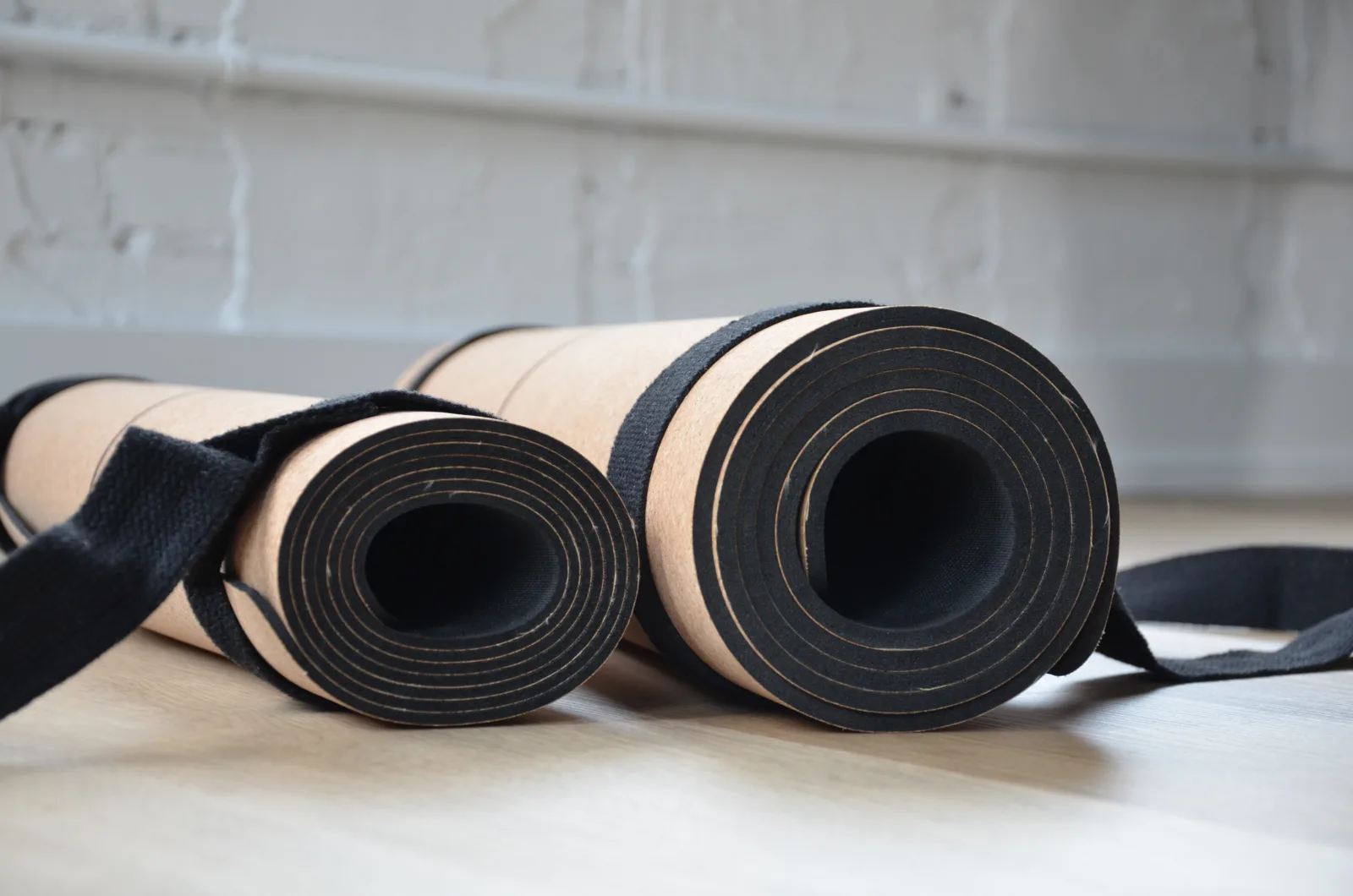

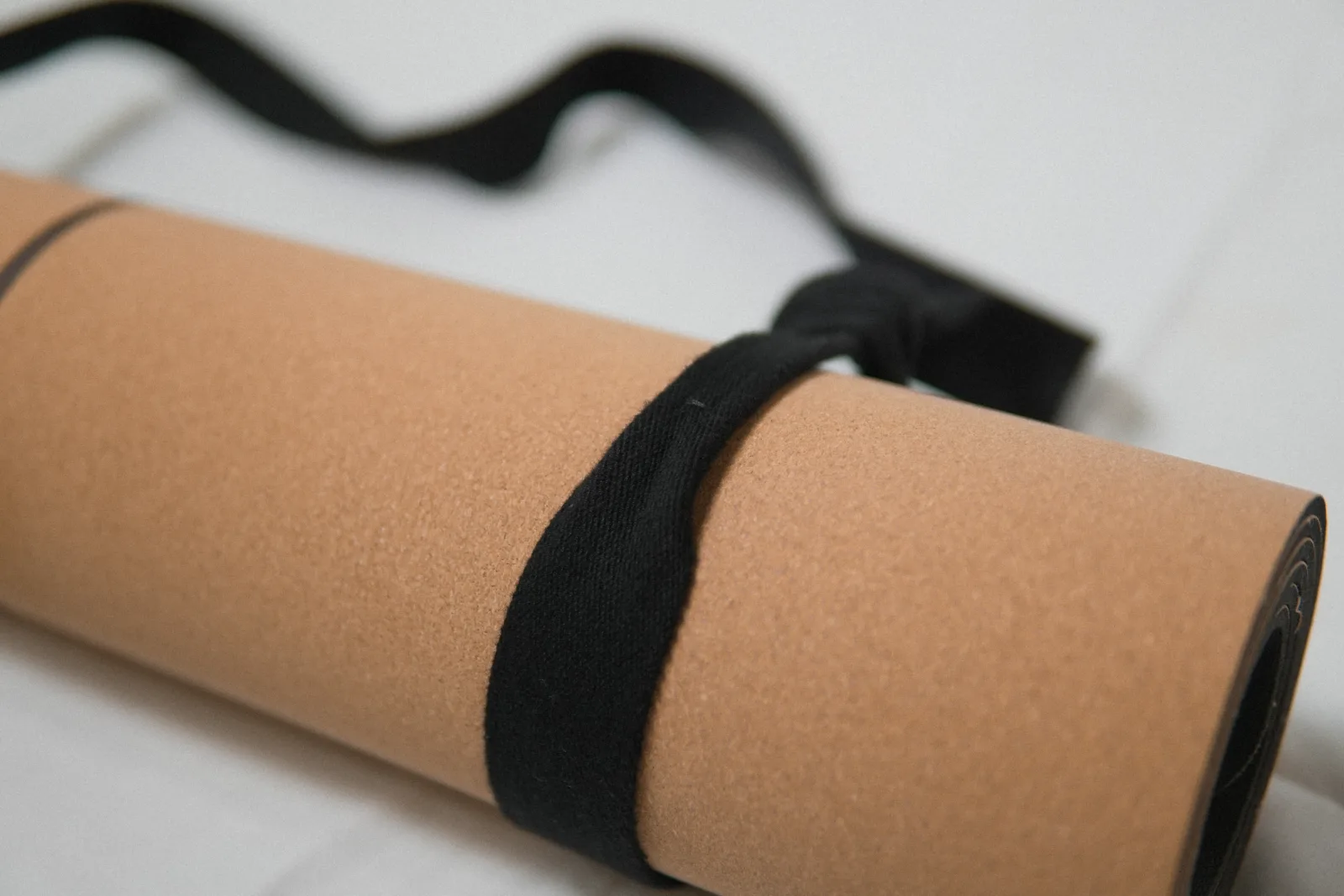
Yes, if you sweat and you care what your mat is made from. A cork mat grips better as you sweat, and it is made from trees, not plastic. The trade-off is weight.
What most yoga mats are made of
Most yoga mats are plastic. The most common is PVC, also called vinyl, the same plastic used in pipes and flooring. PVC is stiff on its own, so makers add plasticizers, chemicals that make plastic soft and bendy. When the Ecology Center lab tested eleven yoga mats in 2019, all the PVC mats contained plasticizers. One mat made from recycled wetsuits contained phthalates, a type of plasticizer. Some mats sold as “PER” turned out to be PVC under another name.
The next most common is TPE, short for thermoplastic elastomer. It is a soft, light plastic, and makers rarely say exactly what is in it.
Many premium mats have a top layer of PU, or polyurethane, another plastic made mostly from oil, on a natural rubber base.
A Solterra mat has no plastic layer. The top is cork from Portugal, the base is natural rubber, and the two are heat-bonded with water-based glue. Both the cork and the rubber are FSC certified. FSC is the Forest Stewardship Council, an independent body that certifies materials come from responsibly managed forests.
What cork is
Cork is the bark of the cork oak tree. It is stripped from the living tree by hand, and the tree grows a new layer. No tree is cut down.
Under a microscope, cork is made of tiny sealed pockets, about 40 million in a single cubic centimetre, each filled with air. More than half of cork is air. That is why it feels soft under your hands and springs back when you move.
The walls of those pockets contain suberin, a natural waxy substance that water cannot pass through. When you sweat, the sweat stays on top of the cork instead of soaking in.
Grip
Cork grips better as it gets damp. Plastic mats work the other way: TPE turns slippery when wet, and PU tops lose some grip. On a cork mat, sweat sits on the surface and your hands and feet stay put.
Natural rubber underneath
Natural rubber is made from latex, the milky sap of the rubber tree. Farmers collect it by cutting a thin groove in the bark, and the tree keeps producing for decades. Most other rubbers are synthetic, made from oil. A study of rubber plantations found the trees take in far more carbon dioxide over their life than farming them gives off, so natural rubber has a much smaller carbon footprint than synthetic rubber.
The rubber base holds the mat to the floor and gives it cushion. Cork goes on top because it handles sweat better. Some all-rubber mats have tiny open pores on the surface that soak up moisture, which can make them slick in a sweaty class.
Your own mat
Studio mats are shared by everyone in the class. With your own mat, the only sweat on it is yours.
The trade-offs
Cork and natural rubber are heavier than plastic foam. We put a lot of R&D into keeping ours light: 1.7 kg for the 3mm and 3 kg for the 6mm. The base is natural rubber, so the mat is not for anyone with a latex allergy. A new mat has a light rubber smell that fades. Cork grips best with a little warmth or moisture, so in a cold room, mist it lightly before you start. Keep the mat out of direct sun and hot cars, because sunlight breaks down natural rubber over time.
So, are cork yoga mats better?
If you sweat, practise often and care what your mat is made from, yes. If you want the lightest or cheapest mat, plastic will suit you better.