
Look for a natural rubber base, a plain cork top and the right thickness for where you practise. Check the base first, because some cheaper cork mats sit on plastic.
1. Check the base
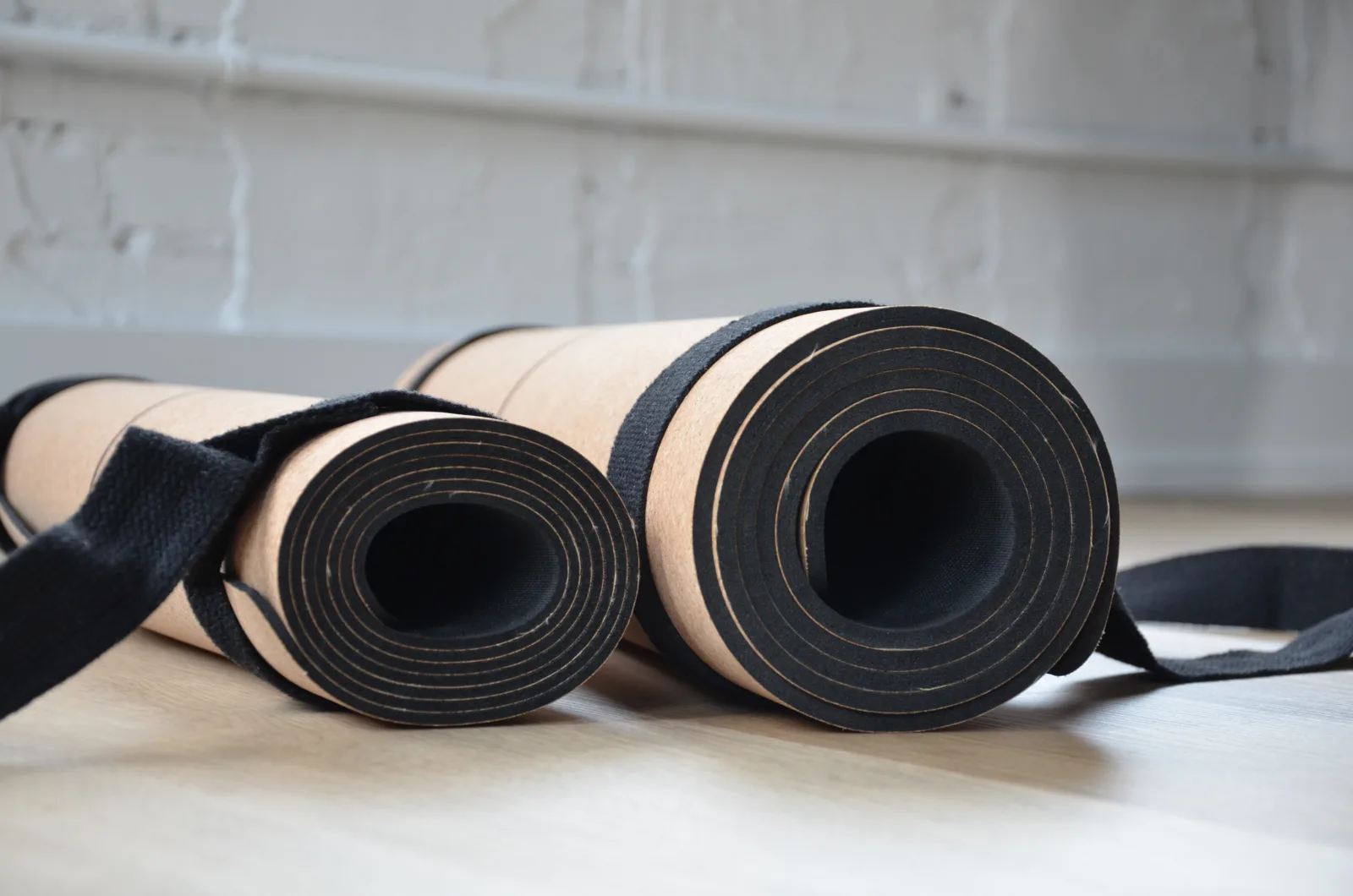
A cork mat has two layers, and listings usually talk about the cork. The bottom layer matters just as much. It is either natural rubber, made from tree sap, or TPE, a soft plastic. Rubber is heavier and holds the floor better. TPE is lighter and cheaper. If a listing does not say which it uses, ask.
2. Check the cork
About half the world’s cork comes from Portugal, which has more than 700,000 hectares of cork oak forest. Ask where the cork is from and whether the top is plain cork or coated. Ours is Portuguese cork, and both the cork and the rubber are FSC certified.
3. Choose a thickness
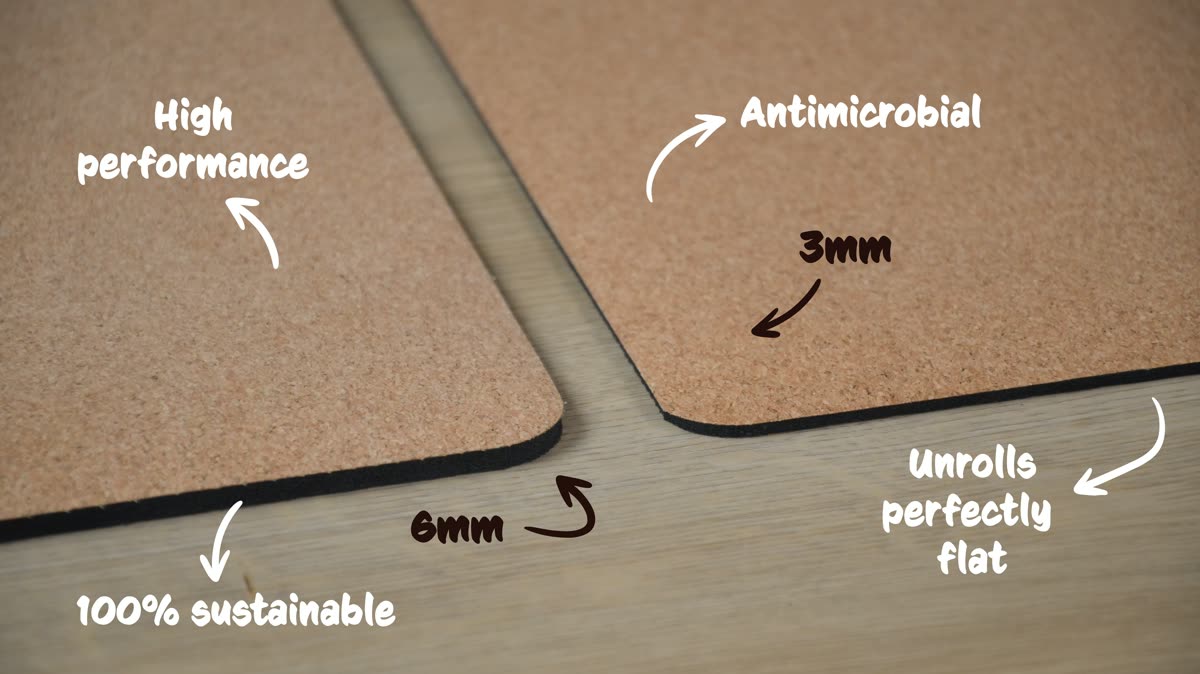
The 3mm is firmer and keeps you close to the floor, which helps in balance poses, and at 1.7 kg it is easy to carry. The 6mm has more cushion for knees and wrists and weighs 3 kg, so it suits a home practice.
4. Check the size
Ours is 66 cm wide and 180 cm long, so there is space to spread your hands and feet in wide poses without stepping off the edge.
5. Check how the layers are joined
Ask how the cork is attached to the base. Ours is heat-bonded with water-based glue. If the layers start peeling at the edges, the mat is done.
6. Look for the small things
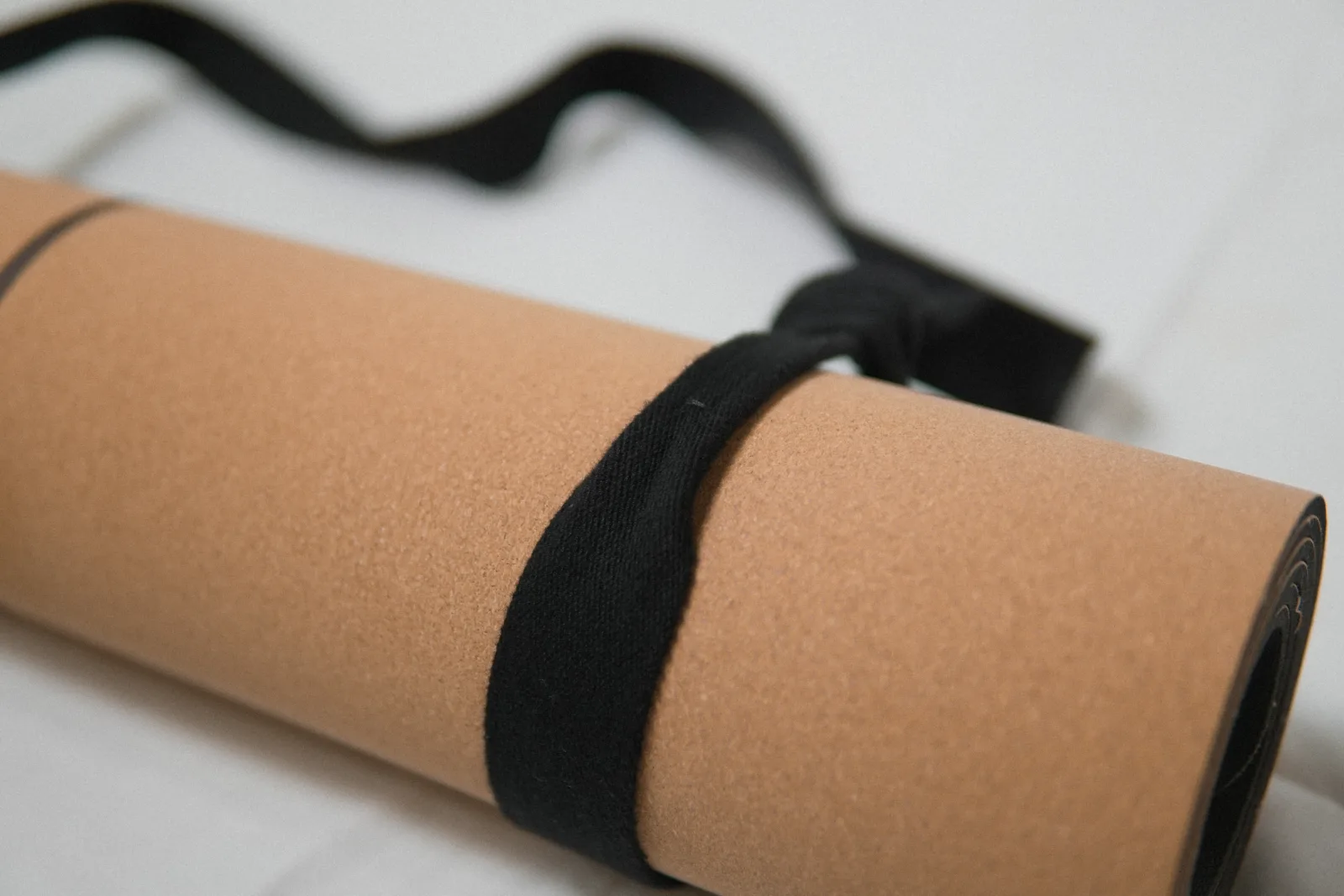
An alignment line helps you place your hands and feet in the same spot every time. A carry strap helps more than you would expect with a 3 kg mat. Ours has both.