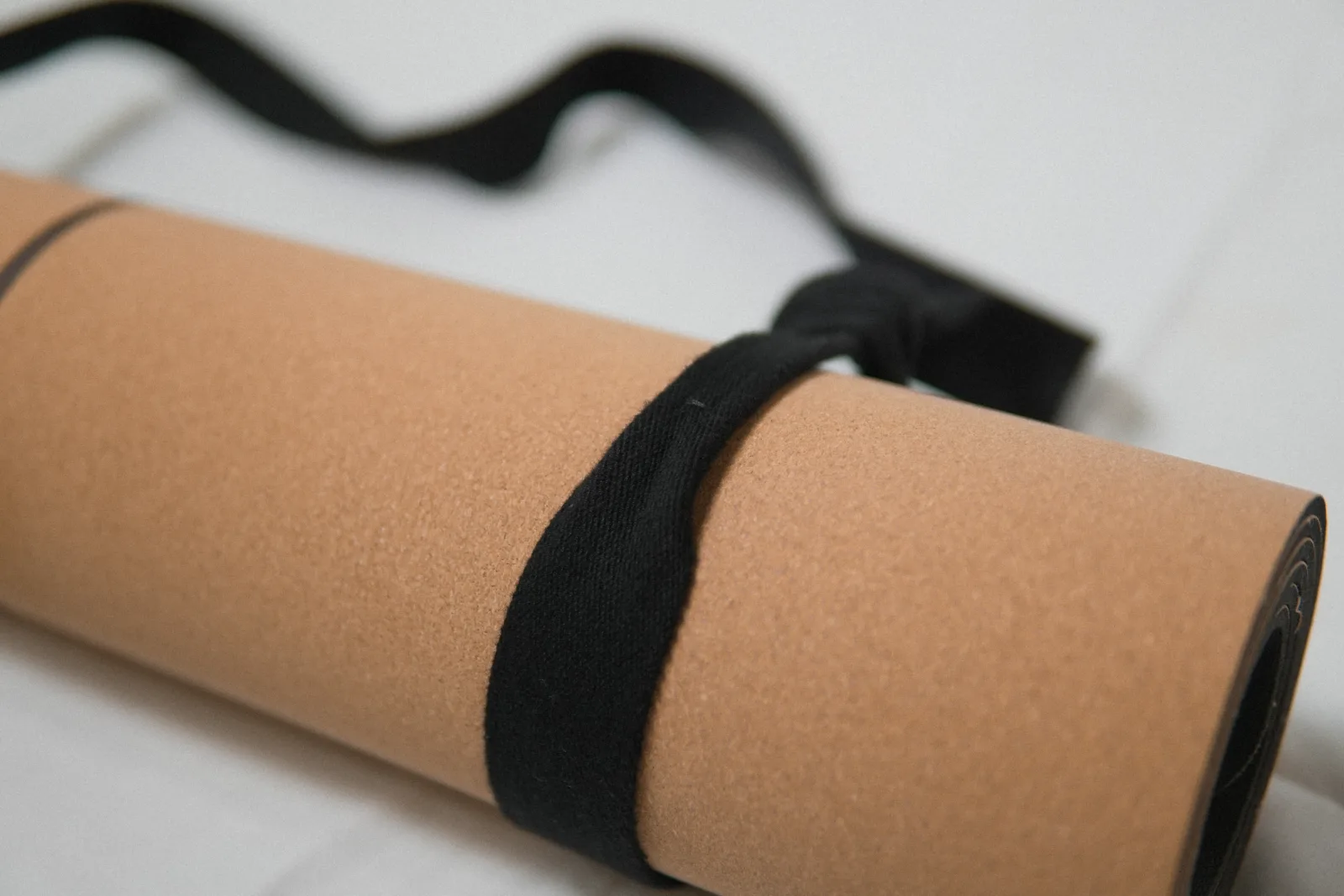

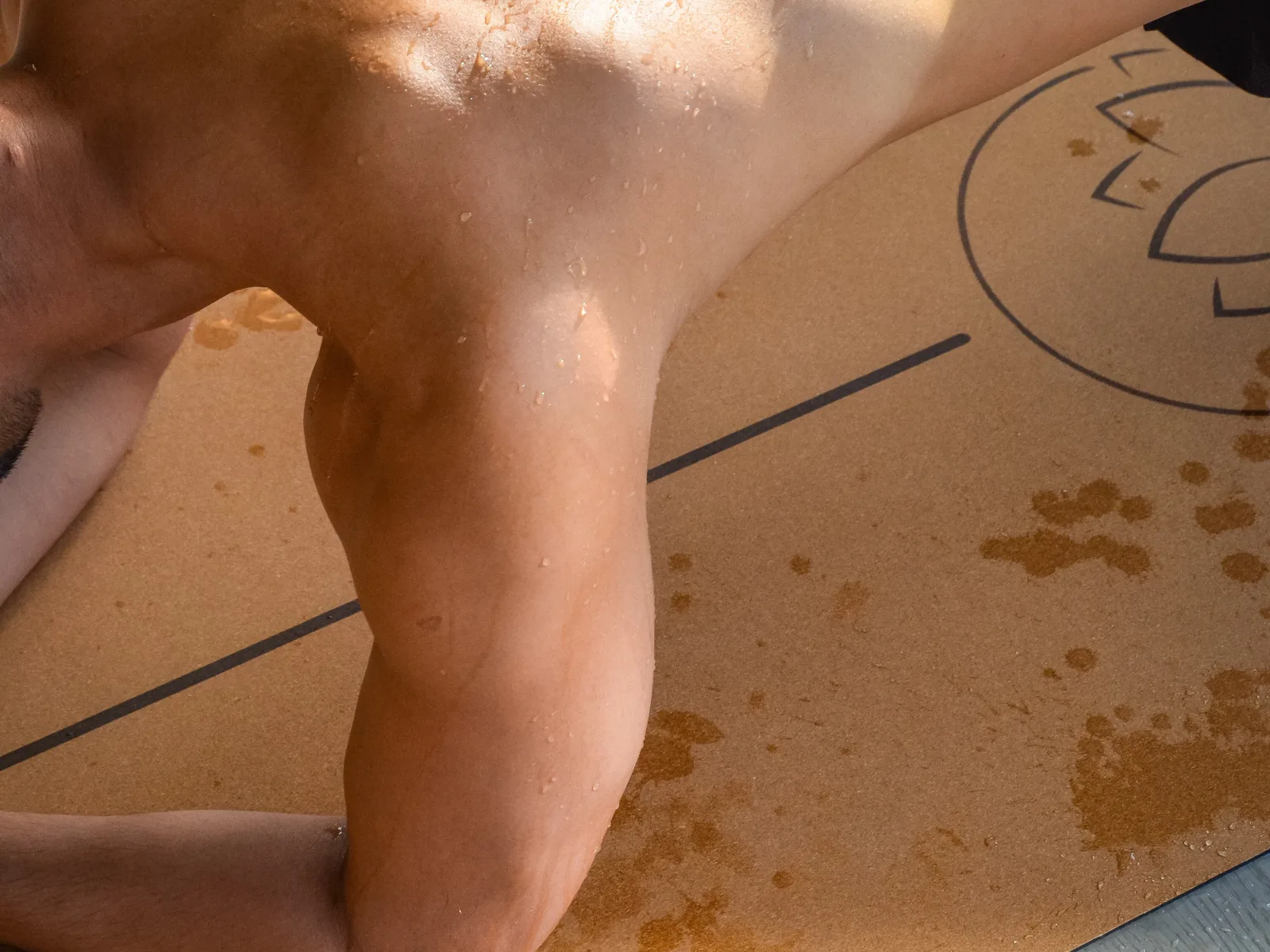
Cork grips better as it gets wet, so you can do hot yoga on a cork mat without a towel. Sweat stays on top of the cork instead of soaking in.
How much you sweat in hot yoga
Bikram yoga runs for 90 minutes in a room heated to 40.6°C (105°F) at 40% humidity. Other hot classes are usually cooler, around 32 to 35°C. In one small study, people lost about 1.5 litres of sweat in a single Bikram class. Much of it lands on the mat.
Why most mats struggle
Plastic mats get slippery when wet, which is why so many people in hot classes lay a towel over theirs. Some rubber mats soak up sweat through tiny open pores in the surface. That helps at first, but over a long class the surface can turn slick.
Why cork works
Cork is made of tiny sealed pockets of air. Their walls contain suberin, a natural waxy substance that water cannot pass through, so sweat stays on the surface instead of soaking in. The damper the cork gets, the better it grips.
Your own mat
Many hot studios rent out shared mats. With your own, the only sweat on it is yours.
3mm or 6mm for hot yoga
Both have the same cork top, so both grip the same. The 3mm weighs 1.7 kg and is easier to carry to the studio. The 6mm weighs 3 kg and has more cushion for floor poses.
After class
Wipe the cork with a damp cloth and let the mat dry flat before you roll it. Do not leave it in a hot car or in the sun, because heat and sunlight break down the rubber base.
Before your first class
A new mat has a light rubber smell. Unroll it and let it air out a few times before you take it to class.