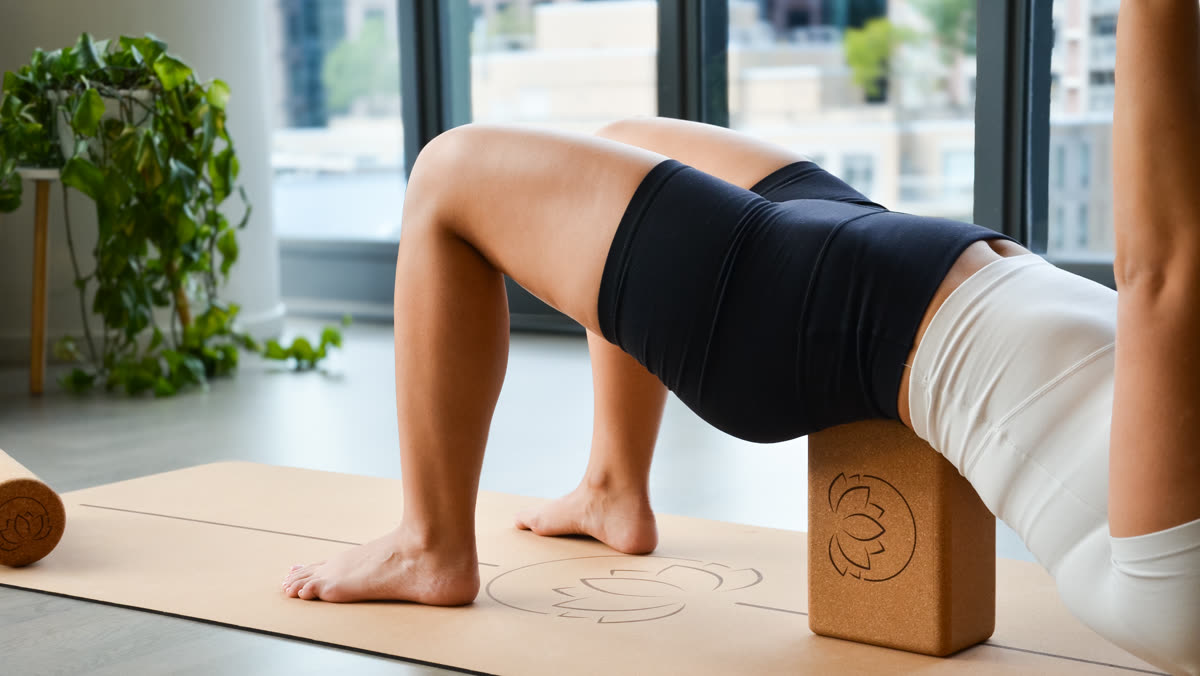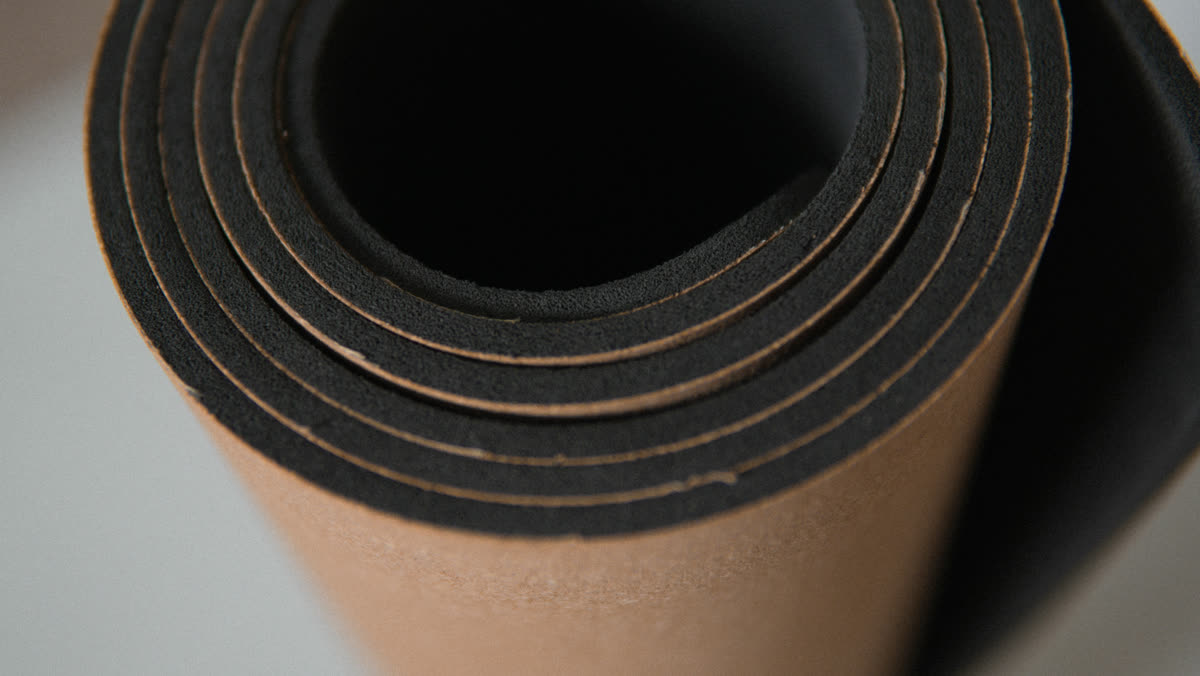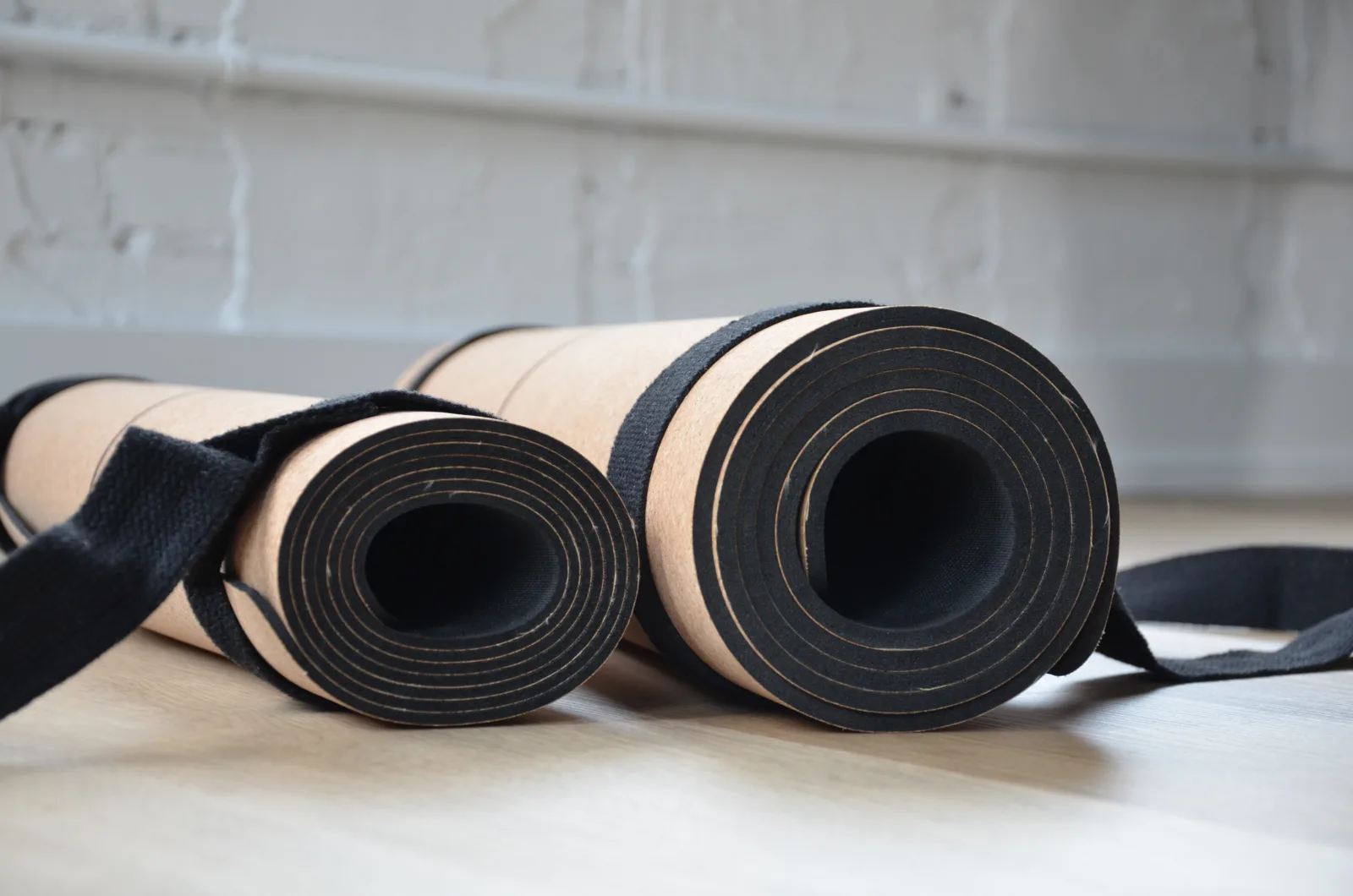

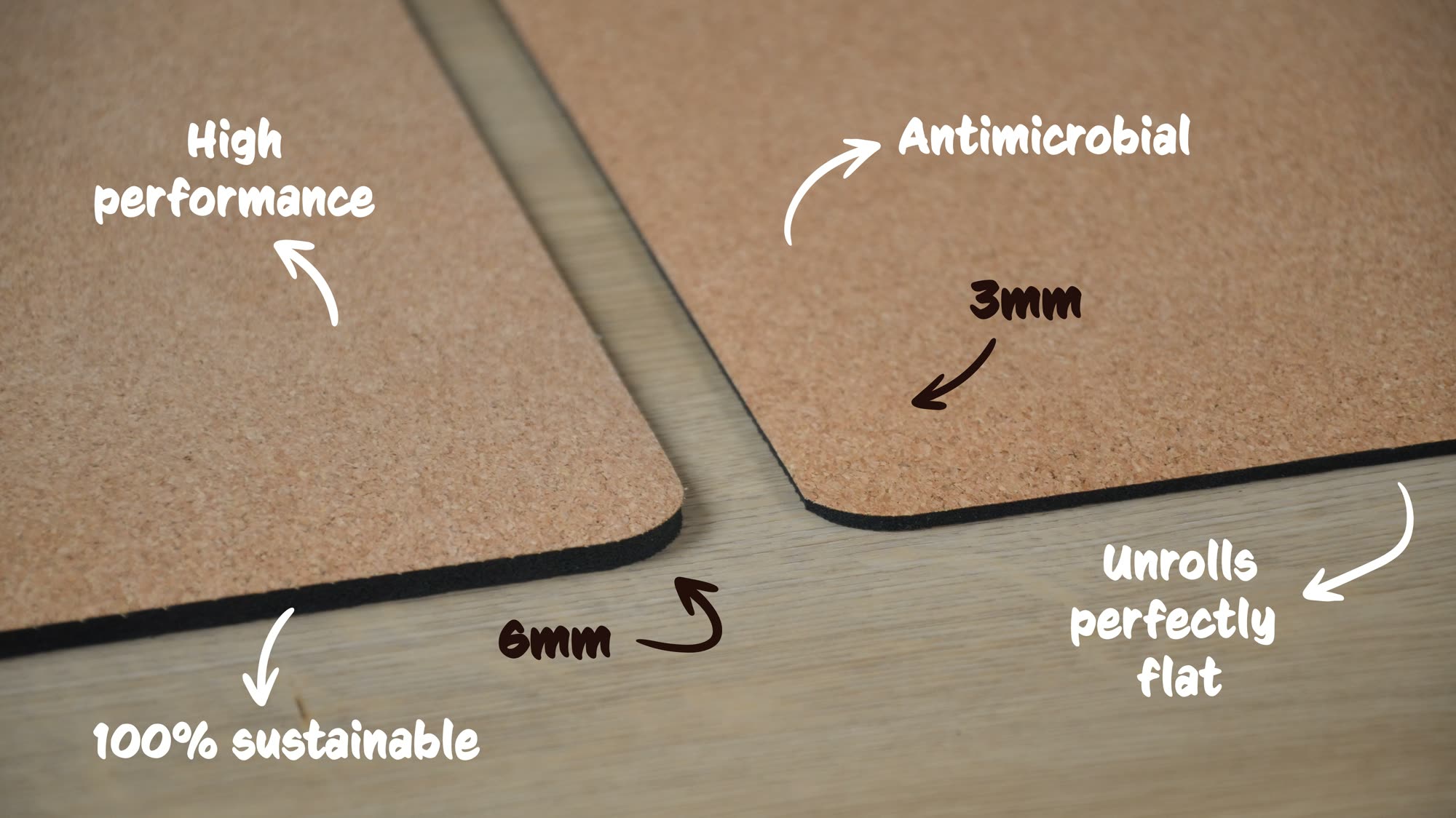
Two mats.
Same cork. Same rubber. Same size. Same grip.
The big difference?
One is 3mm thick.
The other is 6mm.
And the 6mm is almost twice the weight.
So the real question isn’t which mat is better. It’s which one fits the way you practice.
Side by side
| 3mm | 6mm | |
|---|---|---|
| Thickness | 3mm | 6mm |
| Size | 180 × 66 cm | 180 × 66 cm |
| Weight | 1.7 kg | 3 kg |
| Feel | Firmer, closer to the ground | More cushioning for knees, wrists and joints |
| Best for | On the go, travel, balance work | At home, floor work, kneeling, beginners |
At 1.7 kg, the 3mm is easy to pick up and take with you.
At 3 kg, the 6mm is more of a this mat lives here situation.
The extra cushioning in the 6mm comes from its thicker natural rubber base. You notice it most when you’re low to the mat: tabletop, low lunges, long holds on your hands and knees.
The 3mm gives up some of that padding in exchange for a firmer, closer-to-the-floor feel. That can be especially useful in balance poses.
So what’s actually the same?
The materials. Both mats have a cork top from Portugal, heat-bonded to a natural rubber base. Both materials are FSC certified.
The grip. Both use the same cork surface, which grips harder as you sweat.
The alignment line. Same on both.
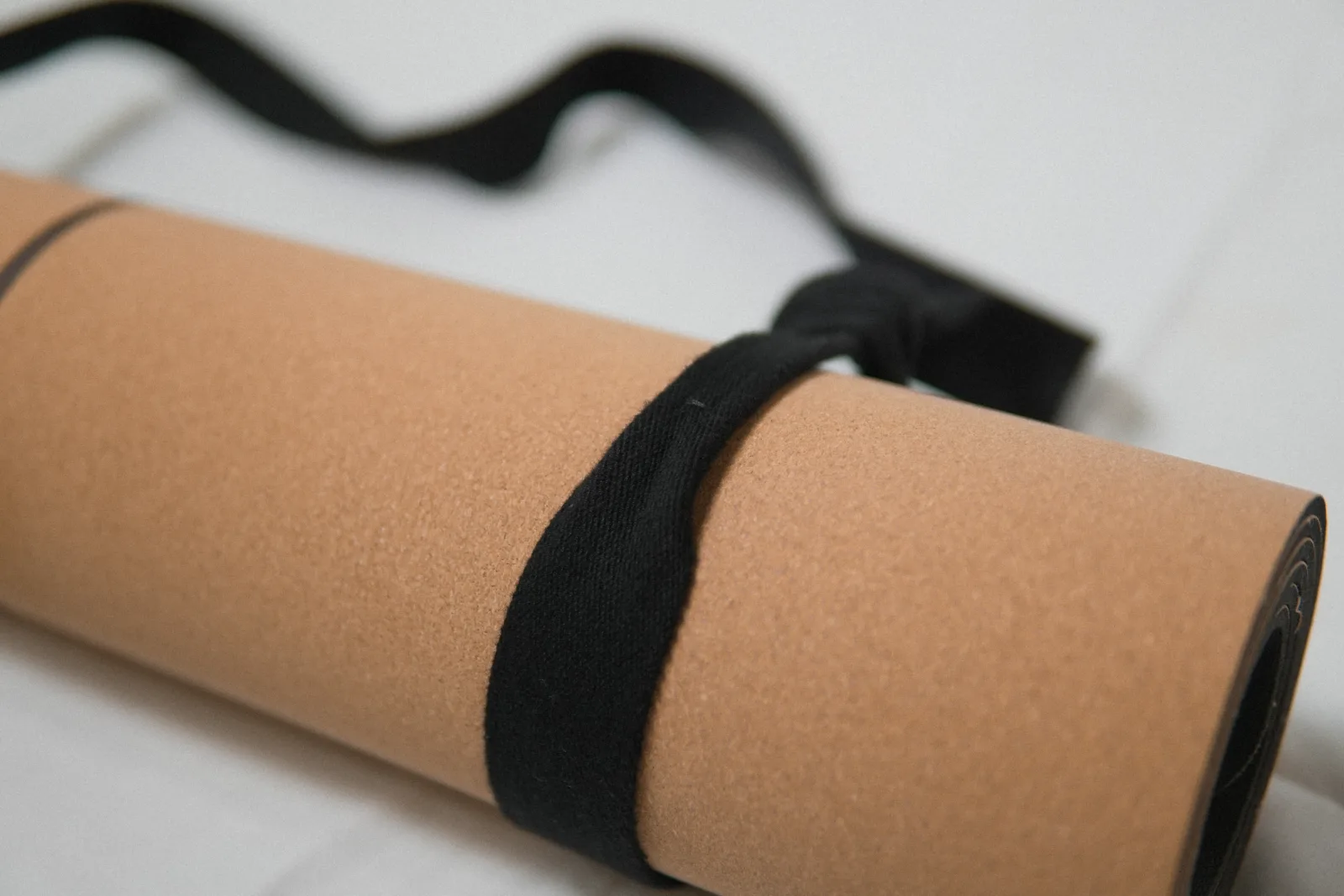
The carry strap. Both come with one. It earns its keep on the 3mm, but the 6mm has one too.
The size and care. Both are 180 × 66 cm, and both can be wiped down with a damp cloth after practice.
So you’re not choosing between two completely different mats.
You’re really choosing how much cushion you want—and how far you’re planning to carry it.
One important note: because both mats use a natural rubber base, neither is suitable for anyone with a latex allergy.
Which one is for you?
If your mat is going to live in one room, or your knees and wrists would appreciate some extra padding, the 6mm makes sense.
If your mat is going to leave the house a few times a week, or you like a firmer, closer-to-the-floor feel for balance work, the 3mm is the lighter option.
And if you’re somewhere in the middle, think about where you practice, how much cushioning you like, and how often you’ll be carrying your mat around.
The 3mm
The 3mm cork yoga mat weighs 1.7 kg and is just over half the weight of the 6mm.
It’s the one for travel, classes, taking your practice outside, or simply moving your mat around without giving it a second thought.
You get the same cork grip and natural rubber base, just with a firmer feel underfoot.
The 6mm
The 6mm cork yoga mat weighs 3 kg and has a thicker natural rubber base.
That extra thickness gives you more cushioning where you feel it most: knees, wrists, joints and other low-to-the-ground positions.
It can also be a better fit if you have a larger frame and want a little more support between you and the floor.
It’s the mat we’d unroll at home and leave there, ready for the next practice.
For more on the materials behind both mats, read Why cork and natural rubber and How it’s made.
Questions? Write to us at admin@solterrayoga.com.