
Hmm… easy. Good materials, great grip, plenty of cushion, and made from trees.
We wanted to make a really good yoga mat.
So, naturally, we started asking a lot of questions.
What makes a mat feel good under your hands? What gives you enough cushion without making you feel disconnected from the floor? What keeps it steady when practice gets sweaty?
The more we looked, the more the answer pointed us in the same direction: natural rubber underneath, cork on top.
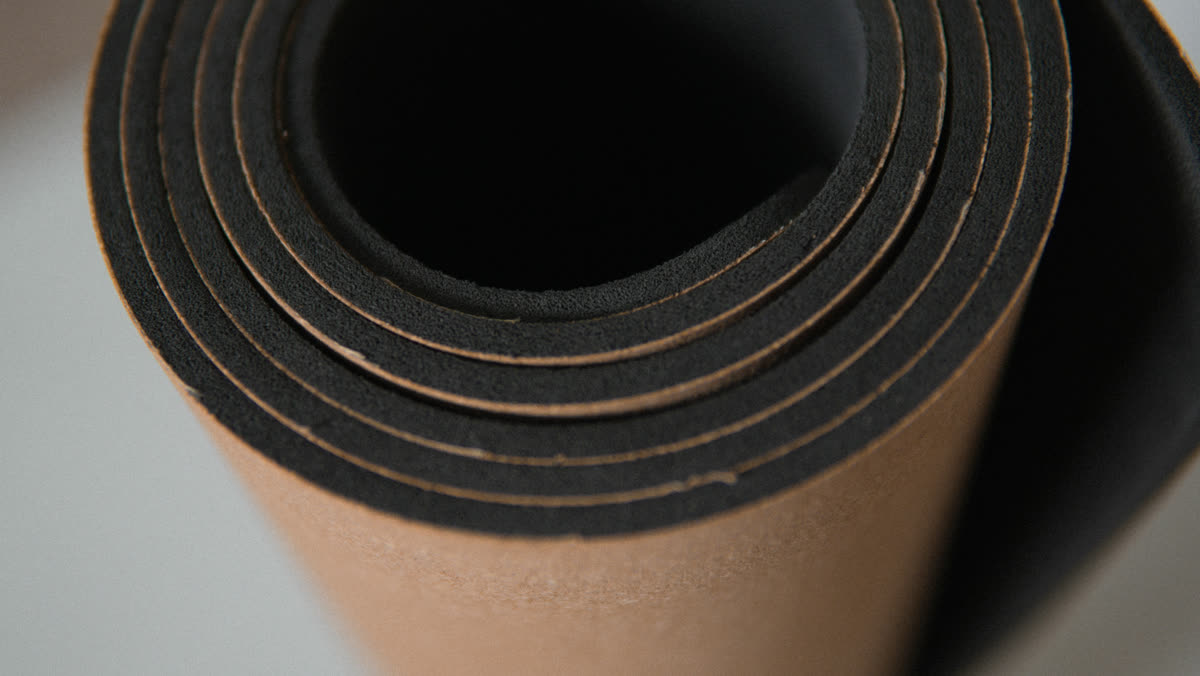
Natural rubber makes a great base. It gives the mat weight, cushion and stability, while keeping it firmly on the floor.
For the surface, we landed on cork.
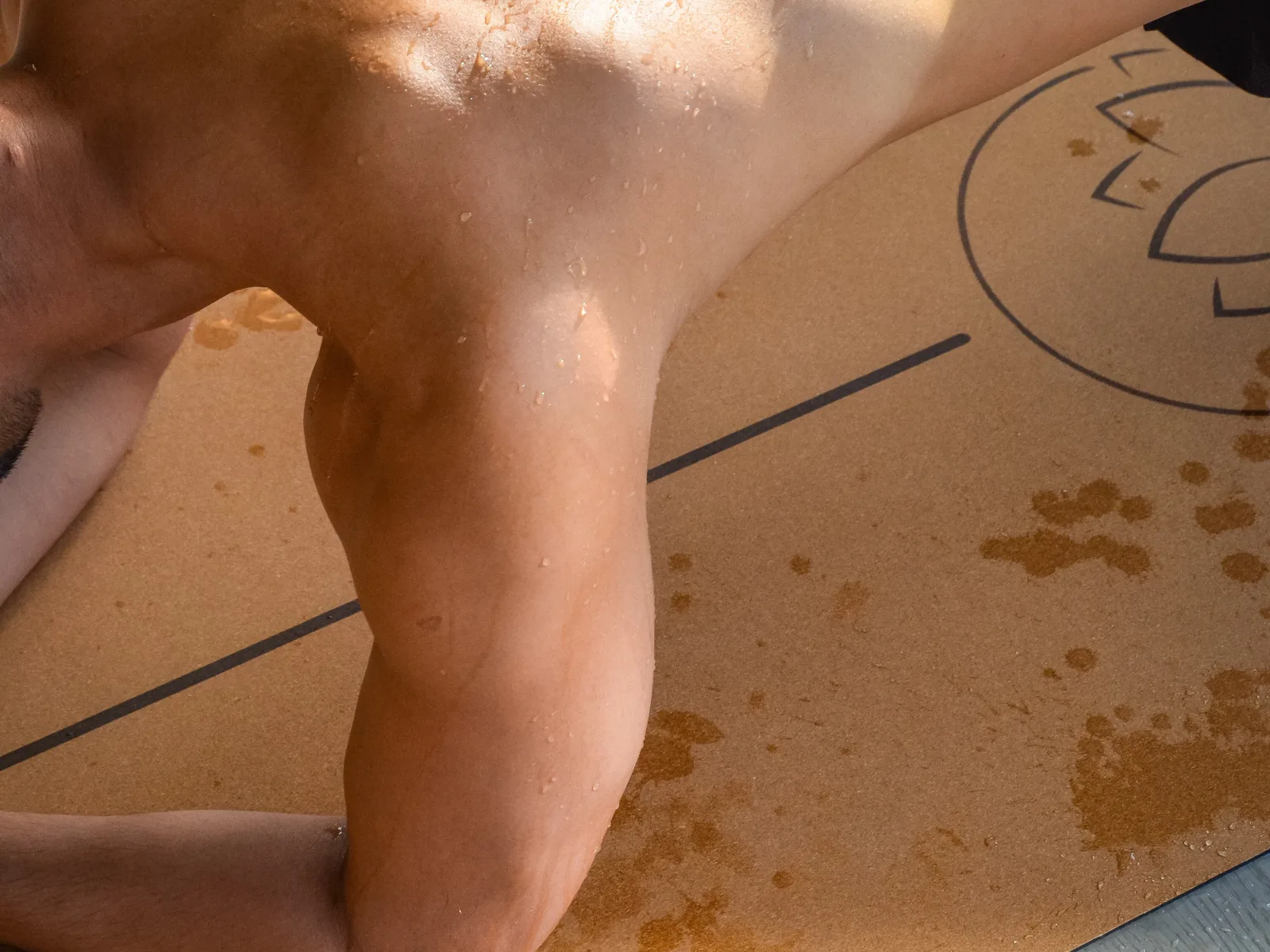
Cork has a warmth and texture that you notice as soon as you put your hands on it. It feels natural rather than synthetic, and, most importantly, it grips. When you sweat, it grips even more.
So the combination made a lot of sense.
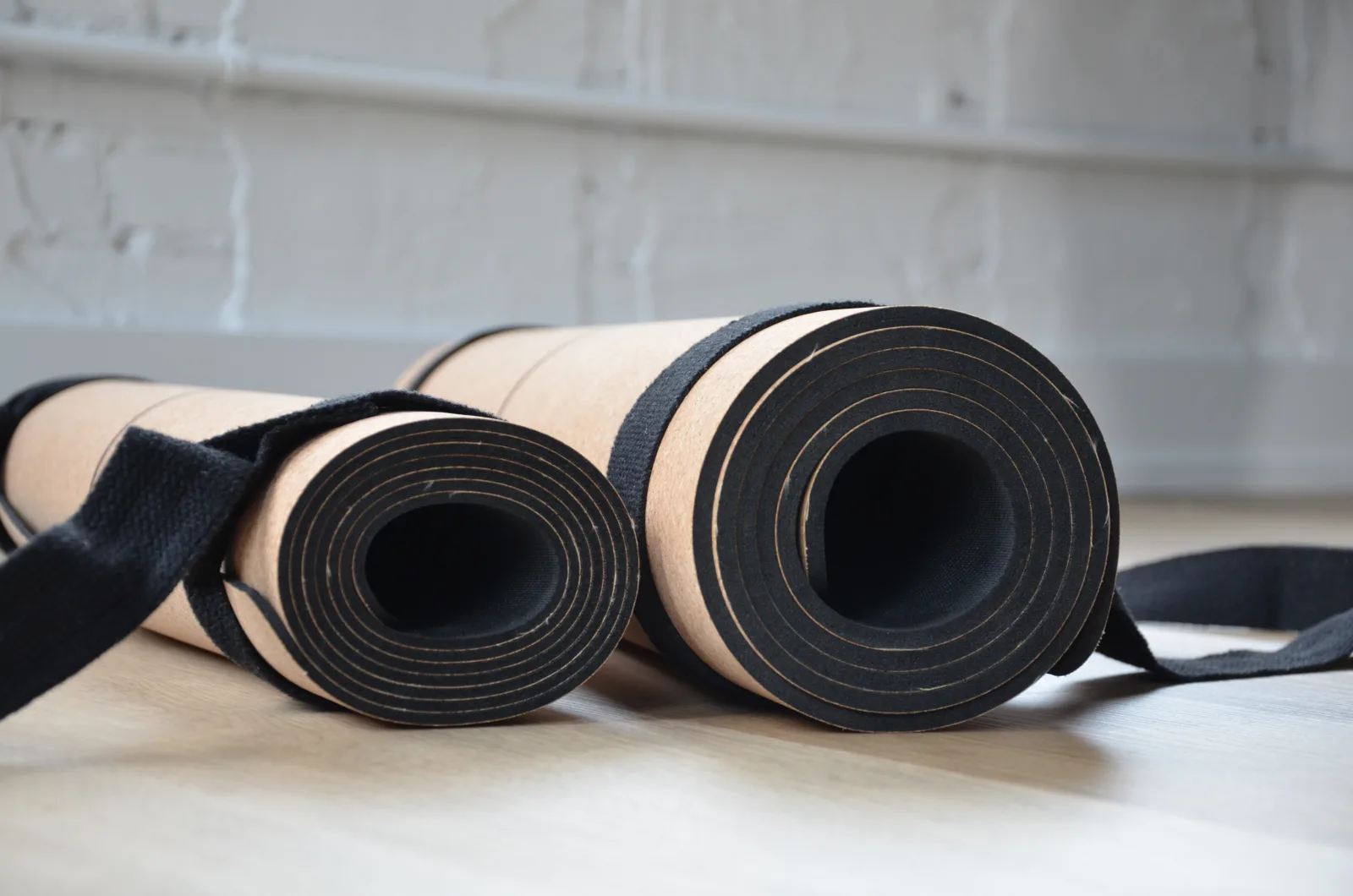
Natural rubber underneath for cushion and stability. Cork on top for grip, warmth and that unmistakable natural texture.
What are most yoga mats made of?
There are a few common choices.
TPE (thermoplastic elastomer) is a family of synthetic materials. It’s usually light, affordable and latex-free.
PVC and foam are also common, particularly on more affordable mats. PVC needs plasticizers to stay soft.
Then there’s polyurethane (PU) on natural rubber, a popular premium combination. The rubber gives the mat a solid base, while the smooth PU surface provides grip. PU is a plastic made mostly from petroleum.
There are cork mats too, of course. But they’re not all made the same way. Some pair cork with natural rubber. Others use TPE underneath.
TPE, PVC and foam mats do have some practical advantages: they’re generally lighter and less expensive. Fair enough.
Here’s how the materials compare:
| Sustainable | Durable | Grip | Feel | |
|---|---|---|---|---|
| Solterra (cork on natural rubber) | Renewable, biodegradable | Very durable, keeps its shape | Excellent dry and wet; improves with sweat | Natural, grounded, earthy texture |
| PU (polyurethane) | Synthetic, not biodegradable | Durable, but can scratch | Excellent dry, moderate when wet | Smooth finish |
| TPE | Partially recyclable | Moderate | Moderate dry, slippery when wet | Soft but spongy |
| PVC / foam | Synthetic, not biodegradable | Prone to dents and wear | Poor, dry and wet | Spongy and unstable |
Based on common material properties. Individual mats vary.
Non-toxic: no PVC or TPE
Once we knew what we wanted the mat to feel like, we looked at what we wanted to leave out, too.
For us, that meant avoiding the plastics many mats are built from.
Some PVC mats now use plasticizers that aren’t phthalates, which is progress. We’d still rather use materials that don’t need plasticizers in the first place.
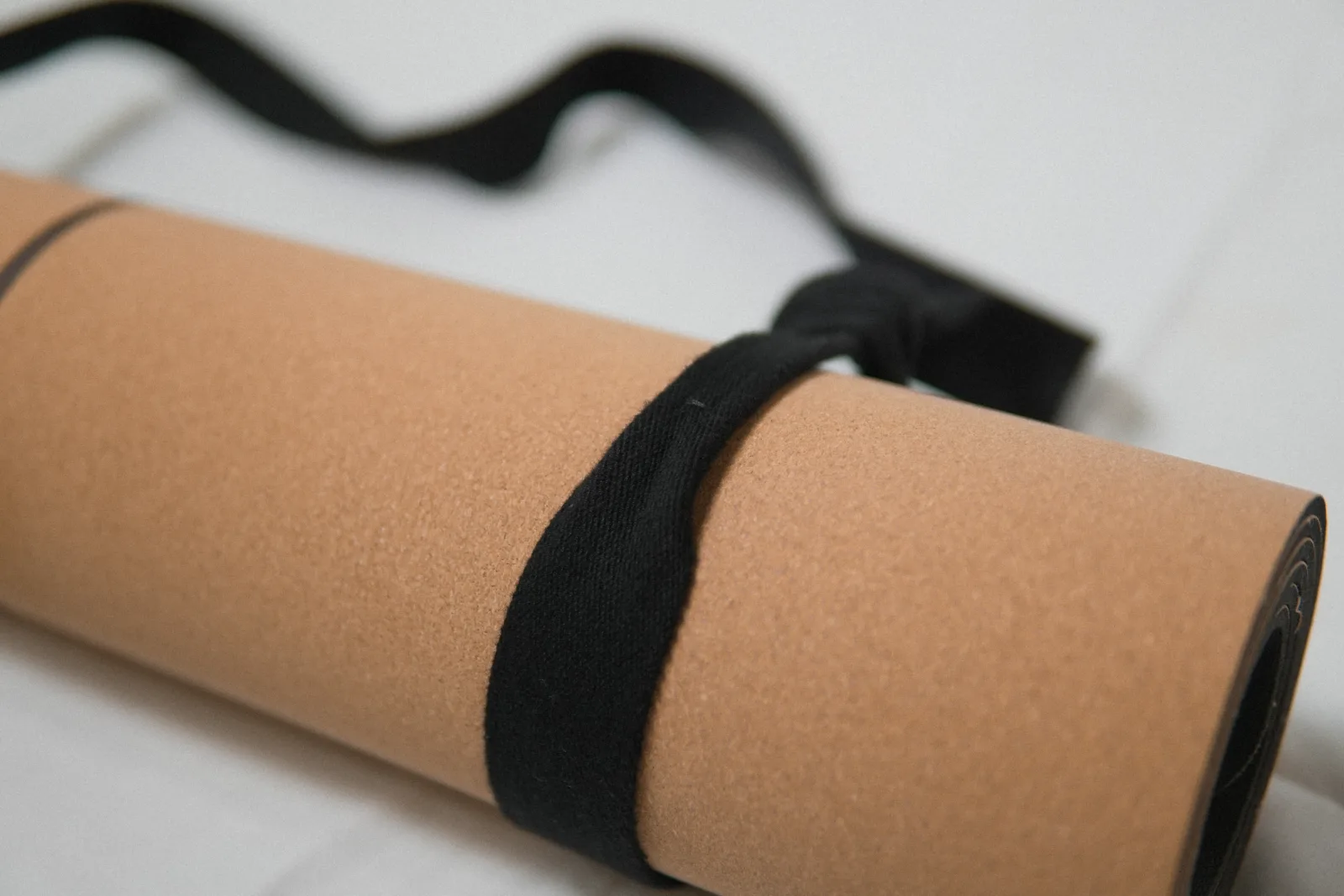
Our mats have a natural cork top, heat-bonded to a natural rubber base with water-based adhesives.
The blocks and roller are simpler still: moulded cork, with nothing added.
Cork is also naturally antimicrobial and resists odours, so keeping it fresh is pretty simple. A damp cloth will do.
Grippy: dry, and even grippier when you sweat
This was one of the things we cared about most.
Cork grips when it’s dry, and it grips harder as you sweat. That makes it particularly well suited to sweaty practices and hot yoga.
The natural rubber underneath does its own job: it gives the mat traction against the floor while the cork gives you traction on top.
The cork holds you. The rubber holds the mat.
The blocks work in much the same way. They grip more as your hands get sweaty, while the textured cork surface of the roller grips the floor instead of skidding around.
Made from trees
And then there’s the part that made us like these materials even more.
Everything we make comes from trees.
Cork is the bark of the cork oak. It’s stripped by hand from the living tree, which then grows a new layer.
Natural rubber comes from latex tapped from the rubber tree.
Both are renewable and biodegradable.
Our cork comes from FSC-certified forests in Portugal, and our natural rubber is FSC certified too. We follow both materials from tree to finished product, and you can read more about that process in How it’s made.
The blocks and roller
We took the same approach with the rest of the range.
Many yoga blocks are made from EVA foam. They’re lighter than cork, but they can compress and lose support over time.
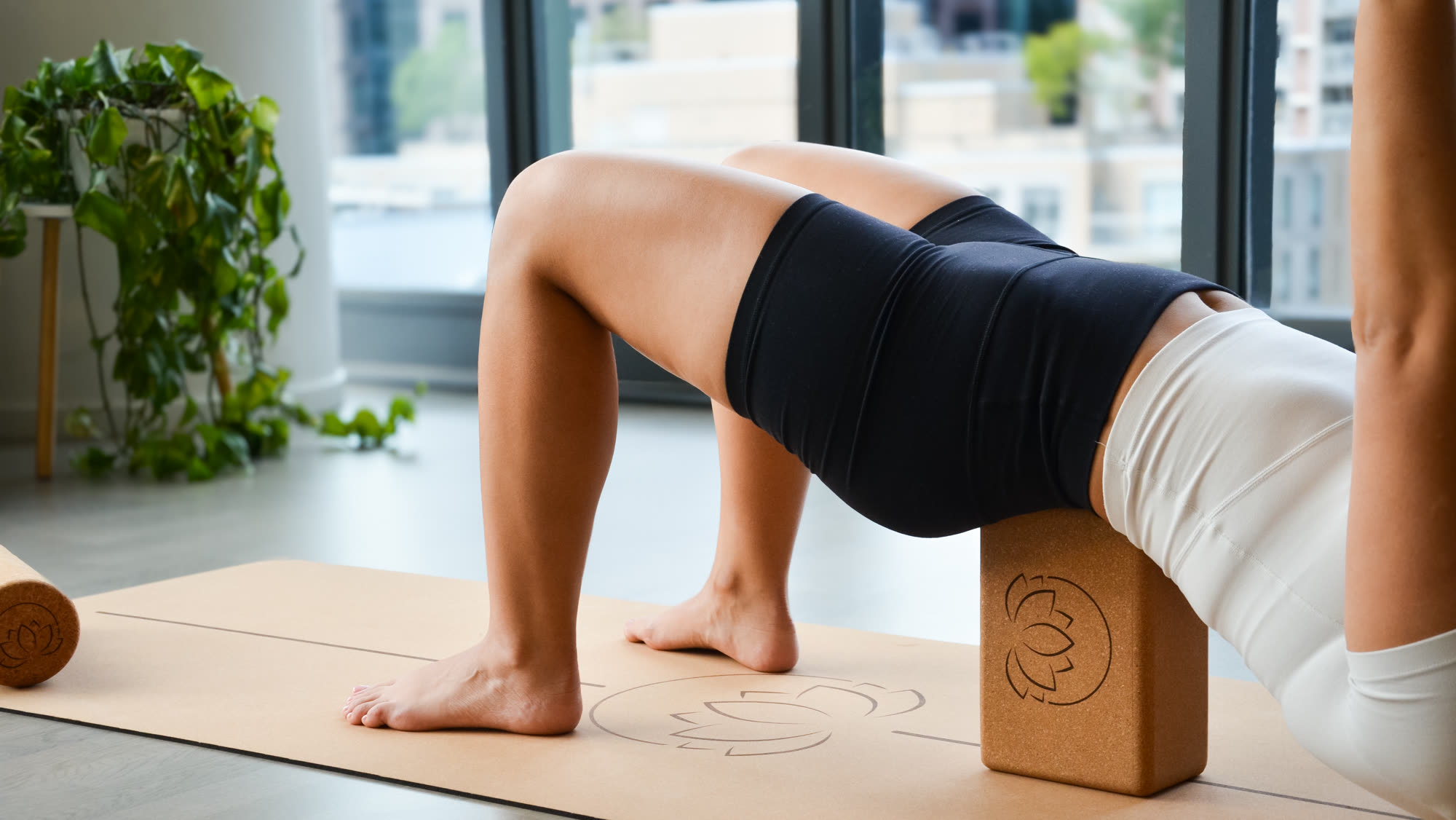
Our cork yoga block set is moulded cork. Each block is dense, firm and designed not to compress.
The set includes two blocks, each measuring 23 × 15 × 10 cm (9 × 6 × 4 in).
Our cork massage roller is moulded cork too. It’s dense, durable and stays firm, giving you consistent, deep pressure without plastics or petrochemicals.
It measures 10 × 30 cm (4 × 12 in), and yes, it’s firmer than a foam roller. That’s intentional. If you want a soft, cushioned roll, a foam roller will probably suit you better.
So, why cork and natural rubber?
Because after looking at what makes a mat feel good to practice on, we kept coming back to the same combination.
Natural rubber for cushion and stability.
Cork for grip, warmth and texture.
Two materials from trees that happen to work really well together.
Sometimes the simple answer is the right one.
Choosing your mat
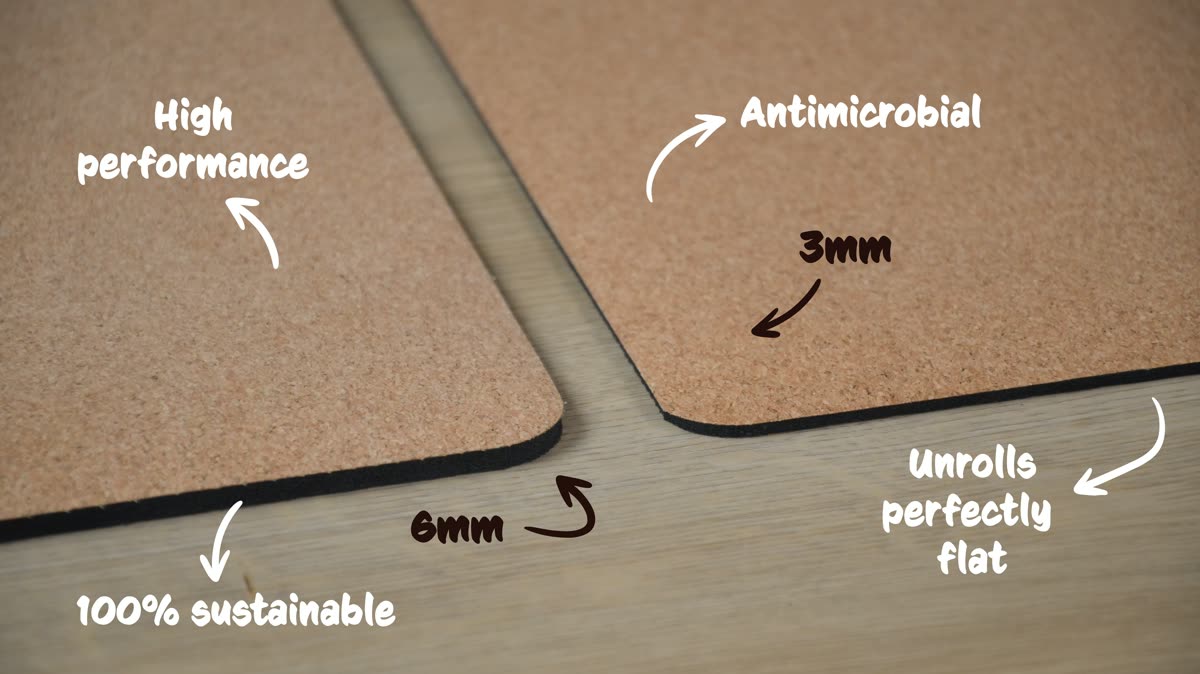
Both Solterra mats are made from the same materials, in the same way. The main difference is thickness—and, naturally, weight.
The 3mm cork yoga mat is just over half the weight of the 6mm, making it the easier one to take with you.
The 6mm cork yoga mat has a thicker natural rubber base, giving your knees and wrists more cushioning. It’s the one that makes sense for staying at home.
You can read more about the difference in 3mm vs 6mm.
Solterra is a Canadian brand, and everything we make is sold on Amazon.ca. Questions about our materials? Write to us at admin@solterrayoga.com.